From the ridiculous news files. On September 2, there will be a hearing in Hawaii for a civil suit to prevent the Large Hadron Collider from starting operation. I am not a legal expert but I don't understand how you can file a law suit in Hawaii to stop the operation of a scientific enterprise operating in Europe. This sounds pretty far fetched to me.
The people filing the suit are Walter Wagner and Luis Sancho. Apparently these guys are worried about the possibility of the collider producing deadly mini-black holes, that will swallow the earth in a cataclysmic fury. Wagner has put together this website with an exciting video:
Stop the LHC until we know its safe
Wagner says that this device, which may also produce anti-matter and all-consuming stranglets, will be operated "all in the same of science supporting theories with no practical benefit".
If mini-black holes don't cause you to loose some sleep tonight, maybe strangelets will. Unfortunately I haven't been able to find much information about Luis Sancho, apparently he is some kind of Spanish science fiction writer.
Tuesday, August 19, 2008


Bohmian Quantum Mechanics
From time to time a friend of mine keeps trying to get me interested in "Bohmian" quantum mechanics. In a nutshell, this is a theory that was developed to try and restore some classical physics to the quantum world and explain the random and "spooky" nature of the quantum theory.
It does this with a device known as the "quantum potential". Whats kind of interesting is that it doesn't dispense with quantum mechanics as you know it at all. It incorporates it into a larger, albeit much more complicated picture. So Schrodingers equation is still with us.
Even more interesting, Bohmian quantum mechanics gives the same experimental predictions as "standard" quantum mechanics. As far as I know nobody has been able to propose an experimental test to distinguish between the two.
Bohmian quantum mechanics isn't exactly fringe, and its not cook science, but its not mainstream either. There are a couple of reasons for this. I would take a guess at them as:
1) Standard quantum mechanics is driven down the throats of budding physics PhD's. They probably won't even hear much about Bohmian quantum mechanics, so why bother with it?
2) Its mathematically nasty. For me, classical mechanics is actually messier and more difficult from a calculational standpoint than quantum mechanics is. Ordinary quantum mechanics just involves some simple PDE's and linear algebra, but classical mechanics is actually a bit more hairy. Bohm brings some of that back and adds to it. So the mathematical machinery might make it distasteful for some to bother with.
3) Occam's razor. Given #2, and the fact that standard quantum mechanics agrees with experiment, why pick the more complicated theory?
4) Religious adherence. I do think that there is a religious fervor about quantum mechanics as its currently laid out. It can't be wrong, can it?
Quantum mechanics is so bizarre that I don't think we should be surprised if someday its found there is more to it. Maybe it is Bohmian quantum mechanics. Isn't it easier to believe that there is a quantum potential filling space-time that guides particles and makes them entangled and all that, instead of just believing by fiat that there is spooky action at a distance and things aren't real until you measure them? I tend to take this view, but think that Bohmian quantum mechanics is on the right track but not the right answer. What Bohmian quantum mechanics really does is restore causality, which was Einstein's point of view. But I don't think Einstein was much of a fan of what Bohm came up with.
Here are some books to read if you're interested in diving into the controversy. First lets start with popular level books by Bohm himself:
Wholeness and the Implicate Order
The Undivided Universe
If you have some mathematical background but aren't an expert, this book is a great intermediate between a popular book and a textbook. I highly recommend it. But I can hardly believe they are charging $80 for it! I bought it way back in 1992 for $20. It has an excellent historical review on the Einstein-Bohr debates, gets to the core of the spookiness of quantum mechanics and introduces some concepts from Bohm:
The Meaning of Quantum Theory
Finally, the only known textbook on Bohmian Quantum Mechanics, sure to give you lots of headaches:
The Quantum Theory of Motion
I encourage everyone to take a look at the Bohmian theory. I for one, know I am real when nobody else is looking.
It does this with a device known as the "quantum potential". Whats kind of interesting is that it doesn't dispense with quantum mechanics as you know it at all. It incorporates it into a larger, albeit much more complicated picture. So Schrodingers equation is still with us.
Even more interesting, Bohmian quantum mechanics gives the same experimental predictions as "standard" quantum mechanics. As far as I know nobody has been able to propose an experimental test to distinguish between the two.
Bohmian quantum mechanics isn't exactly fringe, and its not cook science, but its not mainstream either. There are a couple of reasons for this. I would take a guess at them as:
1) Standard quantum mechanics is driven down the throats of budding physics PhD's. They probably won't even hear much about Bohmian quantum mechanics, so why bother with it?
2) Its mathematically nasty. For me, classical mechanics is actually messier and more difficult from a calculational standpoint than quantum mechanics is. Ordinary quantum mechanics just involves some simple PDE's and linear algebra, but classical mechanics is actually a bit more hairy. Bohm brings some of that back and adds to it. So the mathematical machinery might make it distasteful for some to bother with.
3) Occam's razor. Given #2, and the fact that standard quantum mechanics agrees with experiment, why pick the more complicated theory?
4) Religious adherence. I do think that there is a religious fervor about quantum mechanics as its currently laid out. It can't be wrong, can it?
Quantum mechanics is so bizarre that I don't think we should be surprised if someday its found there is more to it. Maybe it is Bohmian quantum mechanics. Isn't it easier to believe that there is a quantum potential filling space-time that guides particles and makes them entangled and all that, instead of just believing by fiat that there is spooky action at a distance and things aren't real until you measure them? I tend to take this view, but think that Bohmian quantum mechanics is on the right track but not the right answer. What Bohmian quantum mechanics really does is restore causality, which was Einstein's point of view. But I don't think Einstein was much of a fan of what Bohm came up with.
Here are some books to read if you're interested in diving into the controversy. First lets start with popular level books by Bohm himself:
Wholeness and the Implicate Order
The Undivided Universe
If you have some mathematical background but aren't an expert, this book is a great intermediate between a popular book and a textbook. I highly recommend it. But I can hardly believe they are charging $80 for it! I bought it way back in 1992 for $20. It has an excellent historical review on the Einstein-Bohr debates, gets to the core of the spookiness of quantum mechanics and introduces some concepts from Bohm:
The Meaning of Quantum Theory
Finally, the only known textbook on Bohmian Quantum Mechanics, sure to give you lots of headaches:
The Quantum Theory of Motion
I encourage everyone to take a look at the Bohmian theory. I for one, know I am real when nobody else is looking.
Monday, August 18, 2008
Astronomers Precisely Measure the Hubble Constant
When I first got interested in theoretical physics, it must have been about 1991. Stephen Hawkings first popular book "A Brief History of Time" had recently come out. It became a best seller and helped generate a lot of interest in cosmology and physics. Thinking back to what was in the book, it amazes me how much has been discovered in physics, astronomy, and cosmology since then.
If you've read the book one of the debates that used to go on among cosmologists was whether or not the universe was going to recollapse on itself or die in a runaway expansion. Neither alternative sounded very pleasant. If the universe recollapses on itself it brings to mind all kinds of bizarre scenarios. Just consider that in that case, which Hawking seemed to favor at the time, the universe would have always existed. A big bang happens, the universe expands, then it reaches a maximum size and shrinks down again, starting over with a new big bang. Since its always been here there have been an infinity of universes, and probably an infinity of life forms. Even though life may be unlikely since the universe has recycled an infinite number of times then countless civilizations must have sprung up through the eons. But the forces of nature are huge, so no matter what the recollapse (the so-called "big crunch") of the universe would leave even the most advanced of beings doomed.
That kind of made life seem like a bad, eerie dream for me. Well no matter. A few years later astronomers discovered that the universe was not only expanding, its expanding at faster and faster rates! This is something undreamed of back in 1991 as far as I know. It was a complete shock and it led to the notion of dark energy. Now we may find out that dark energy, something scientists only recently became aware of, may be a dominant force in the physics of the universe.
As Michio Kaku once said on television, his favorite venue, physicists now believe the universe would not die a fiery death (the big crunch again) but would instead die in ICE! (his emphasis). Basically the mysterious dark energy would push all the galaxies far apart, and everything would eventually cool and decay. In the distant future there won't be anything around except swarms of decaying fundamental particles. A sad end to a universe that gave birth to Brent Favre, Paris Hilton, and Oprah. Little wonder we haven't discovered any alien civilizations-they probably self-destruct in a frenzy of narcissism.
Well I digress. What got me thinking about this was an article in the New York Times about cosmology that appeared today. Astronomers have once again measured the Hubble constant, and it appears that the evidence looks better that the universe is about 13.7 billion years old. If you aren't an NY Times subscriber I recommend going through the pain of becoming one, its free and they have lots of great articles about cosmology and physics.
If you've read the book one of the debates that used to go on among cosmologists was whether or not the universe was going to recollapse on itself or die in a runaway expansion. Neither alternative sounded very pleasant. If the universe recollapses on itself it brings to mind all kinds of bizarre scenarios. Just consider that in that case, which Hawking seemed to favor at the time, the universe would have always existed. A big bang happens, the universe expands, then it reaches a maximum size and shrinks down again, starting over with a new big bang. Since its always been here there have been an infinity of universes, and probably an infinity of life forms. Even though life may be unlikely since the universe has recycled an infinite number of times then countless civilizations must have sprung up through the eons. But the forces of nature are huge, so no matter what the recollapse (the so-called "big crunch") of the universe would leave even the most advanced of beings doomed.
That kind of made life seem like a bad, eerie dream for me. Well no matter. A few years later astronomers discovered that the universe was not only expanding, its expanding at faster and faster rates! This is something undreamed of back in 1991 as far as I know. It was a complete shock and it led to the notion of dark energy. Now we may find out that dark energy, something scientists only recently became aware of, may be a dominant force in the physics of the universe.
As Michio Kaku once said on television, his favorite venue, physicists now believe the universe would not die a fiery death (the big crunch again) but would instead die in ICE! (his emphasis). Basically the mysterious dark energy would push all the galaxies far apart, and everything would eventually cool and decay. In the distant future there won't be anything around except swarms of decaying fundamental particles. A sad end to a universe that gave birth to Brent Favre, Paris Hilton, and Oprah. Little wonder we haven't discovered any alien civilizations-they probably self-destruct in a frenzy of narcissism.
Well I digress. What got me thinking about this was an article in the New York Times about cosmology that appeared today. Astronomers have once again measured the Hubble constant, and it appears that the evidence looks better that the universe is about 13.7 billion years old. If you aren't an NY Times subscriber I recommend going through the pain of becoming one, its free and they have lots of great articles about cosmology and physics.
Linear Algebra Error Sheet
The error sheet/correction (Linear Algebra Demystified Errata) is now posted here.
Can we take Mathematics too seriously?
Eugene Wigner famously commented on the "unreasonable effectiveness of mathematics" to paraphrase. Why he said this is pretty obvious. Looking at how precisely you can calculate things, like the energy levels of a hydrogen atom or using pure mathematics to come up with something like an atomic bomb, the deep connection between mathematics and the physical universe becomes all too apparent.
But sometimes I read articles like Big Brain Theory and think some physicists have gone off the deep end. Its all too tempting to observe that mathematics works, and works very well in explaining the physical world and in making predictions. Then jump to the conclusion that mathematics is reality. Many physicists (theoretical ones anyway) almost have a platonists view of the world.
This reminds me of the parable of the shadows in the cave. Plato came up with this idea to illustrate what we think of as reality is really just a shadow. I think this is how many theoretical physicists view the universe. The icky, wet, solid universe of things we experience is the shadow, and the precise and tidy world of mathematics is the real universe.
But maybe its the other way around. Maybe math, beautiful as it is, is nothing more than a tool. The math and theories of physics is the shadow. To make this idea more concrete, Einstein's theory of general relativity isn't reality, its just a tool that makes predictions about observations. This would be more of a positivist point of view. I think if you hold this point of view then the solid every day universe we experience has more reality than some mathematical theory. After all, death or injury is all too real, isn't it?
Honestly I am not sure what side of the argument I fall on. My point of view on this changes from time to time. This is a very deep question about the nature of physical science and there aren't any easy answers. Maybe this reflects the Yin-Yang nature of the universe, and both points of view are true.
But sometimes I read articles like Big Brain Theory and think some physicists have gone off the deep end. Its all too tempting to observe that mathematics works, and works very well in explaining the physical world and in making predictions. Then jump to the conclusion that mathematics is reality. Many physicists (theoretical ones anyway) almost have a platonists view of the world.
This reminds me of the parable of the shadows in the cave. Plato came up with this idea to illustrate what we think of as reality is really just a shadow. I think this is how many theoretical physicists view the universe. The icky, wet, solid universe of things we experience is the shadow, and the precise and tidy world of mathematics is the real universe.
But maybe its the other way around. Maybe math, beautiful as it is, is nothing more than a tool. The math and theories of physics is the shadow. To make this idea more concrete, Einstein's theory of general relativity isn't reality, its just a tool that makes predictions about observations. This would be more of a positivist point of view. I think if you hold this point of view then the solid every day universe we experience has more reality than some mathematical theory. After all, death or injury is all too real, isn't it?
Honestly I am not sure what side of the argument I fall on. My point of view on this changes from time to time. This is a very deep question about the nature of physical science and there aren't any easy answers. Maybe this reflects the Yin-Yang nature of the universe, and both points of view are true.
Sunday, August 17, 2008
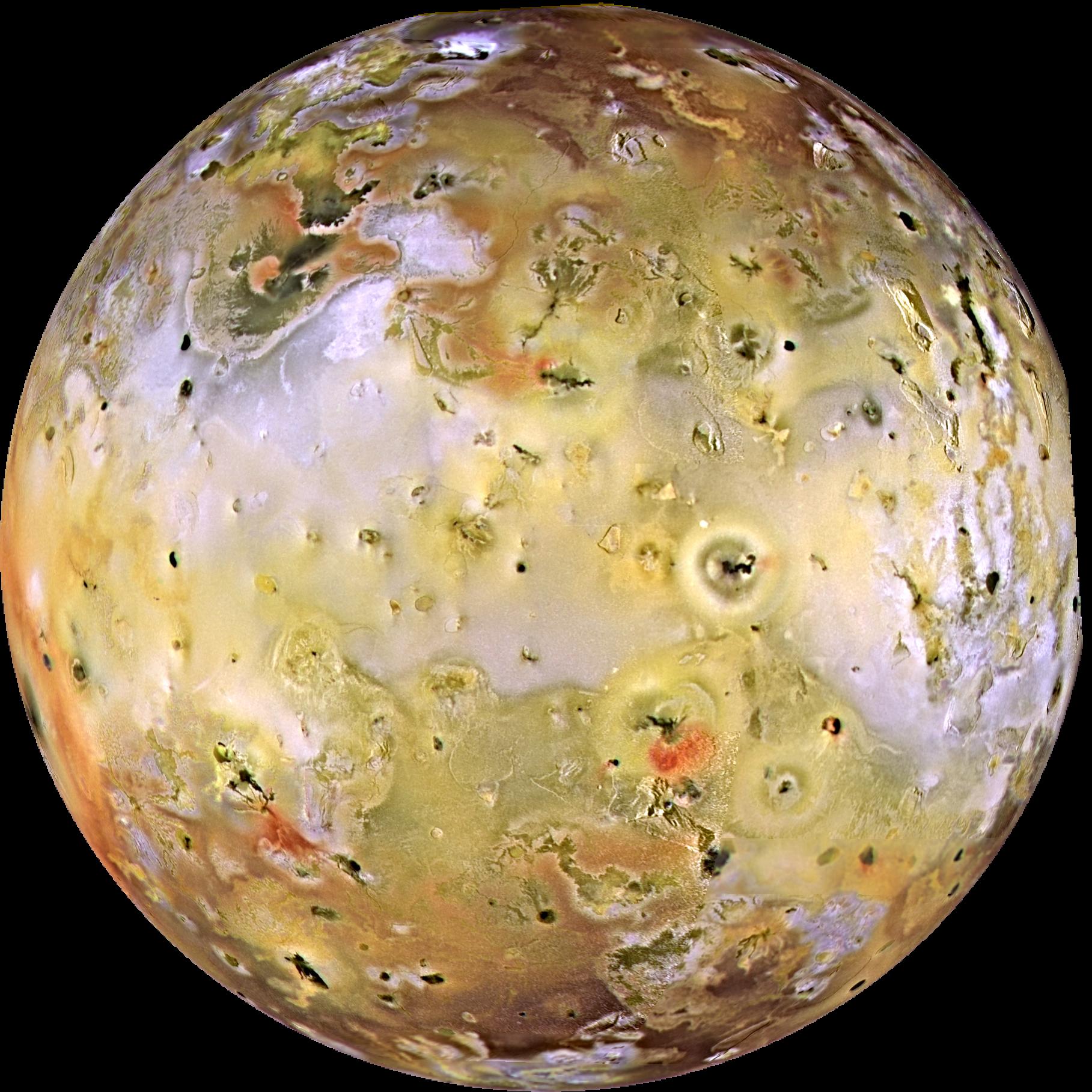
Astronomy Picture of the Day
Check out this picture of Jupiter's moon Io. Made famous in the movies 2001 and 2010, Io is the most active volcanic body in the solar system.
Saturday, August 16, 2008
Will they find the Higgs?
The standard model of particle physics has one major problem. The particles are all massless. This uncomfortable situation was remedied using a clever trick by Peter Higgs way back in 1964. The mathematical details can be found in Quantum Field Theory Demystified. We won't review that here, we'll just note that Higgs postulated the existence of a field, now aptly named the Higgs field, which fills all of space-time. Particles interact with this ever present vacuum field, and just like anything else, different particles interact with different strengths. The strength of the interaction determines the mass of the particle. If there were no Higgs field all particles would travel at the speed of light.
I saw a talk once, I don't remember who gave it, where the guy likened the Higgs field to water in a swimming pool. Imagine being underwater and moving your arm up and down. So by analogy you can kind of think of the resistance of the water to the interaction of a particle with the Higgs field. Like all fields, the Higgs field has a particle associated with it. Its called the Higgs boson, and would be the only known fundamental particle with zero spin.
One of the first items of business for the Large Hadron Collider (LHC) is going to be finding the Higgs. But what if they don't find it? Surprisingly there are some other ideas that explore the acquisition of mass by particles in the standard model. So either way, whatever comes of the search for the Higgs at the LHC is going to lead to some interesting physics down the road.
Here is a link to a paper exploring one of these ideas, for the more mathematically inclined.
Soluble Theory of a noncompact Group
I saw a talk once, I don't remember who gave it, where the guy likened the Higgs field to water in a swimming pool. Imagine being underwater and moving your arm up and down. So by analogy you can kind of think of the resistance of the water to the interaction of a particle with the Higgs field. Like all fields, the Higgs field has a particle associated with it. Its called the Higgs boson, and would be the only known fundamental particle with zero spin.
One of the first items of business for the Large Hadron Collider (LHC) is going to be finding the Higgs. But what if they don't find it? Surprisingly there are some other ideas that explore the acquisition of mass by particles in the standard model. So either way, whatever comes of the search for the Higgs at the LHC is going to lead to some interesting physics down the road.
Here is a link to a paper exploring one of these ideas, for the more mathematically inclined.
Soluble Theory of a noncompact Group
Subscribe to:
Posts (Atom)

 Posts
Posts